Eau de Parfum vs Eau de Toilette Explained
By Liza Truter · 4 September 2026 · 8 min read
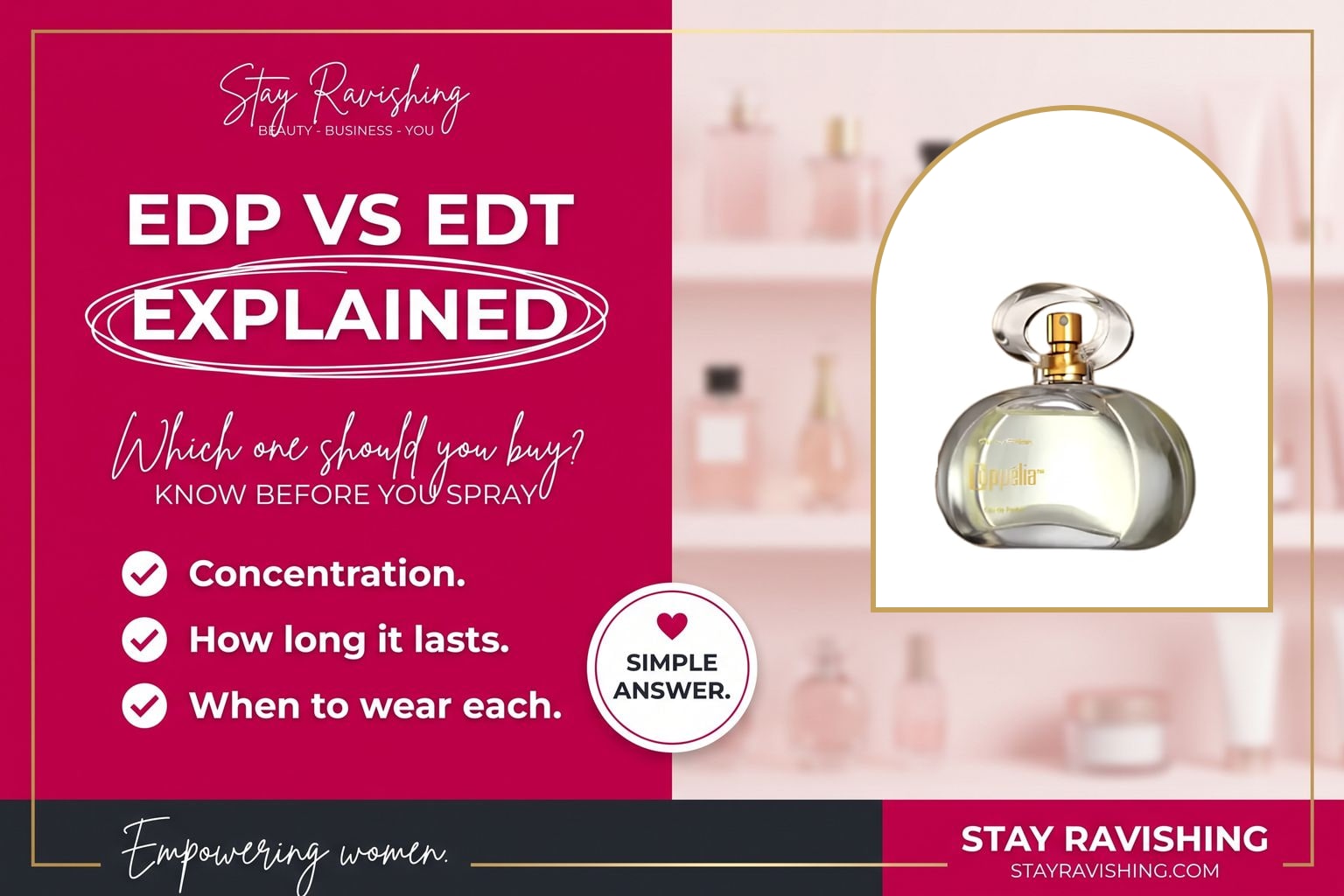
If you have ever stood in front of two bottles that look almost identical, share the same name, and then discovered one costs more than the other, you have met the eau de parfum vs eau de toilette question. Those little letters on the label — EDP and EDT — are not marketing decoration. They tell you how much actual fragrance oil is inside, and that single fact changes how strong a perfume smells, how close it sits to your skin, and how many hours it stays with you.
I sell these fragrances every single week, and this is genuinely the most common thing new customers ask me. So let me settle it properly. By the end of this post you will know exactly what the concentrations mean, which one suits your day, and how to pick your next bottle with confidence — whether or not you have ever heard of the brands I stock.
What "eau de parfum" and "eau de toilette" actually mean
Every perfume is a blend of fragrance oil (the part that smells) dissolved in alcohol and a little water. The concentration — the percentage of that fragrance oil — is what the label names describe. From lightest to strongest, the usual ladder looks like this:
- Eau Fraîche / body mists — the lightest, roughly 1–3% oil. Lovely for a quick refresh, gone quite quickly.
- Eau de Cologne (EDC) — around 2–5% oil. Bright, splash-on freshness.
- Eau de Toilette (EDT) — roughly 5–15% oil. Light, fresh and easy to wear.
- Eau de Parfum (EDP) — roughly 15–20% oil. Richer, rounder and longer-lasting.
- Parfum / Extrait — the most concentrated of all, though far less common on the high street.
So the short answer to "what is the difference between EDP and EDT?" is simply this: eau de parfum holds a higher concentration of fragrance oil than eau de toilette. That is the whole basis of everything else — longevity, projection and price all follow from that one number. (These percentage bands are a general industry guide, by the way, not a fixed legal rule, so brands do vary a little.)
Longevity: how long does each one last?
Because eau de parfum carries more oil, it generally lasts longer on the skin — often a good part of the day from a morning spritz. Eau de toilette, being lighter, tends to fade sooner and may want a top-up after a few hours.
I always give the same honest caveat, though: longevity is a general rule of concentration, not a promise printed on any one bottle. Your skin type matters enormously. Dry skin lets fragrance evaporate faster; well-moisturised skin holds it far better. Heat, humidity, where you spray, and the specific ingredients in a scent all play a part. Two EDPs can behave quite differently. So treat "EDP lasts longer than EDT" as a reliable starting point, not a stopwatch. If you want to squeeze the most out of whatever you own, I wrote a whole guide on that — see make your perfume last all day.
Projection and sillage: how much of a statement?
Projection is how far your fragrance travels — the "bubble" people notice as you walk past. Sillage (a lovely French word, pronounced see-yazh) is the scented trail you leave behind.
Eau de parfum, with its heavier oil load, usually projects more warmly and leaves a fuller trail. It feels intimate and enveloping — the kind of scent that rewards someone standing close to you. Eau de toilette sits lighter and closer to the skin, fresher and airier, less likely to fill a room.
Neither is "better." A big projecting EDP is glorious for an evening out and a bit much for a hot open-plan office. A crisp EDT is perfect for daytime, gym bags and anywhere you want to be pleasant rather than unmissable.
Price: why is EDP usually dearer?
More fragrance oil costs more to make, so as a rule eau de parfum is priced above the eau de toilette of the same scent family. That is worth knowing but it is not the full story — because a higher concentration also means you often need fewer sprays to get the same effect. A richer EDP can quietly last longer per bottle than a lighter EDT you have to reapply. So "dearer" on the shelf does not always mean "more expensive to wear."
The happy news is that neither type has to be a luxury purchase. In the range I sell, a beautifully made eau de parfum can sit around R499, and a full-size eau de toilette often lands well under that. You do not have to spend a fortune to get either concentration done properly.
Two real examples: a rich EDP and a fresh EDT
Theory is easier to feel with something concrete, so here are two bottles from my own shelf that show the contrast perfectly.
For the rich, long-lasting side — Coppelia EDP (60ml, R499). This is exactly what an eau de parfum should be: warm, rounded and enveloping, the kind of scent that settles into your skin and stays close through a long evening. Because of the higher concentration you reach for it a little less often than you would expect. If you love the Coppelia world, I go much deeper into the whole family in my Coppelia perfume guide.
For the fresh, easy-wearing side — Awakenings EDT (100ml, R439). A generous 100ml eau de toilette, lighter and brighter on the skin — the sort of thing you spritz happily in the morning without a second thought, top up after lunch if you fancy, and never feel is "too much" in a busy day. That larger bottle size, common with EDTs, is part of why a fresh everyday scent can be such good value.
Put simply: the Coppelia EDP is your close, lasting evening companion; the Awakenings EDT is your bright, uncomplicated daytime friend. Same shelf, two completely different jobs.
Which should YOU buy? A quick decision guide
If you are choosing your first bottle and want a plain answer, run through this:
- New to fragrance, or buying for someone whose taste you're unsure of? Start with an EDT. It is lighter, more forgiving, and less likely to overwhelm.
- Want something for work and daytime? EDT, most of the time — fresh and considerate of the people around you.
- Buying for evenings, dates, colder weather or special occasions? Reach for an EDP. That richness and staying power earns its place at night.
- Hate reapplying and want it to last? EDP, and moisturise first.
- Live somewhere hot, or run warm yourself? A lighter EDT often reads better in heat; strong EDPs can amplify.
- On a tight budget but want a full-size bottle? EDTs frequently come in bigger sizes for less — great value for everyday wear.
And a tip I give every customer: your nose is the real expert. Concentration guides you, but the actual scent has to make you happy. If you would like help matching a fragrance family to your personality and lifestyle, my how to choose your perfume guide walks you right through it. Prefer to shop for him? I have a separate rundown of the best Avroy Shlain men's fragrances too.
Frequently asked questions
Is eau de parfum better than eau de toilette? Neither is better — they are built for different jobs. EDP is richer and longer-lasting for evenings and cooler days; EDT is lighter and fresher for daytime and warm weather. The "best" one is the one that suits the moment you are dressing for.
Does eau de parfum really last longer? Generally yes, because it contains a higher concentration of fragrance oil. But how long any perfume lasts also depends on your skin, the weather and how you apply it, so treat it as a strong rule of thumb rather than a guarantee.
Can I wear eau de parfum during the day? Absolutely — just go lighter with it. One or two sprays of an EDP can carry you beautifully through the day. Save the generous application for evenings.
Why do two bottles of the same perfume smell slightly different? The EDP and EDT versions of one scent are blended differently, not just diluted. The heavier oils in an EDP can bring out deeper, warmer notes, while an EDT often highlights the fresher top notes. Same family, different personality.
Which lasts longer per bottle? Often the EDP, because its strength means you use fewer sprays each time — even though EDTs frequently come in larger bottles. Value depends on how heavily you tend to apply.
The bottom line
Eau de parfum versus eau de toilette really comes down to one honest sentence: EDP is richer and lasts longer, EDT is lighter and fresher, and the right choice is whichever fits your day. Once you know that, the letters on the label stop being confusing and start being genuinely useful.
If you would like a hand choosing — or you want to compare a rich EDP against a fresh EDT in person — I am always happy to help. Have a browse of my online shop, or send me a WhatsApp on 084 990 0030 and tell me a little about what you love. There is a scent, and a concentration, that will feel like it was made for you.